

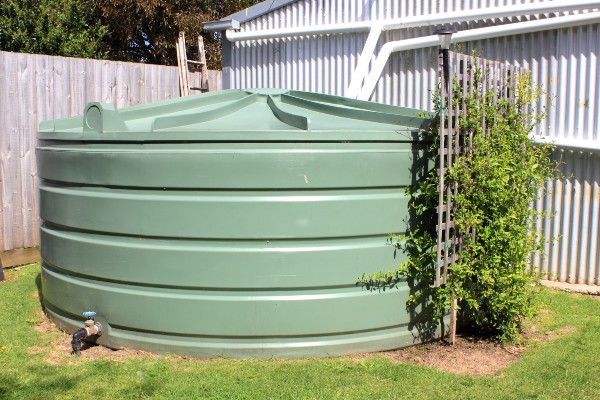
If your household drinks roof-collected rainwater, here is the uncomfortable truth: nobody is checking it but you.
Under the Water Services Act 2021, a stand-alone roof water supply serving a single household is not classified as a drinking water supplier. The Water Services Authority – Taumata Arowai confirms this directly in its Drinking Water Regulation Report 2024. Registered supplies cover 4.4 million of New Zealand’s 5.34 million people. The remaining 940,000 of us are on our own.
And the testing that has been done is sobering. A University of Auckland study reported in April 2026 found that two-thirds of the self-supply households it sampled had E. coli levels above safe limits – with North Auckland the worst region tested at 78%. Around 800,000 New Zealanders rely on self-supplied water. The lead researcher called the results “quite confronting” for a developed nation.
This guide covers what actually accumulates in a Kiwi water tank, what the official guidance says about cleaning frequency (it is stricter than most contractors will tell you), what a clean costs in 2026, and how to keep your water safe between cleans.
Quick answer: how often should you clean a water tank in New Zealand?
Official New Zealand guidance is annual – not “every few years”.
- Inspect the tank every year and check the sludge depth (Health New Zealand – Te Whatu Ora).
- Desludge annually, or as soon as sediment reaches 250 mm deep, or if it starts being drawn into the outlet (MBIE / BRANZ).
- Full drain-and-scrub every five years, or immediately after contamination – a dead animal, algae, or biofilm (MBIE).
- Clean straight away, regardless of schedule, if the water becomes discoloured, cloudy, or develops a taste or smell.
Most commercial cleaners in NZ recommend every two to five years. That is industry practice, not government guidance, and it is looser than what the Ministry of Health and MBIE actually publish.
What is actually in your water tank
Your roof is a large, uncovered collection surface. Everything that lands on it, and everything that lives on it ends up in your tank.
Health New Zealand’s guidance sheet Water collection tanks and safe household water (HE10148) names the usual culprits: bird and animal droppings on the roof, dead animals or insects in the gutters or the tank itself, and lead flashing causing high lead levels in collected water. BRANZ adds decaying leaves, petals and pollen, droppings from possums and rats, particulates from solid fuel flues, and chemical spray drift.
The pathogens
Health NZ specifically names Cryptosporidium, Giardia, Campylobacter, Salmonella and E. coli O157 as organisms that can reach tank water via faecal contamination. These cause the gastro illnesses that quietly circulate through rural NZ households, and national surveillance backs it up. Massey University’s environmental health team reported that in 2023, 419 campylobacteriosis notifications, 90 cryptosporidiosis and 88 giardiasis notifications recorded untreated drinking water as a risk factor – and that more than two-thirds of notifications for these diseases had no risk-factor information recorded at all, meaning the real figures are higher.
Rural New Zealanders are notified with campylobacteriosis at more than double the rate of people in major urban areas.
The heavy metals – an under-appreciated problem
This is the part most tank owners have never considered. A landmark study of 125 domestic roof-collected rainwater supplies across four rural Auckland districts (Simmons et al., Water Research, 2001) found:
- 56% exceeded the microbiological criterion of less than 1 faecal coliform per 100 mL
- 14.4% exceeded the maximum acceptable value (MAV) for lead (0.01 mg/L)
- 17.6% exceeded at least one chemical maximum acceptable value (MAV)
Crucially, supplies with lead or galvanised iron in the roof or collection system were significantly more likely to show lead contamination – and so were supplies with a pH below 7. Acidic tank water dissolves more metal out of your roof.
Massey University research led by Dr Carol Stewart in 2017 reached the same conclusion: older roofs with lead nails and flashings produced water that “frequently exceeds New Zealand’s drinking water long-term maximum allowable level of 10 micrograms per litre”.
If your roof pre-dates the 1990s, has lead-head nails, lead flashing, or old paint, this applies to you. Cleaning the tank does not fix a leaching roof – but it does remove the metal-laden sediment that has already settled on the floor.
What the official NZ guidance actually says (and where it disagrees)
There is no single national rule for cleaning a household tank, because household tanks are not regulated. What exists is guidance from four bodies – and they do not entirely agree. Here is the full picture in one place:
| Source | Document | What it recommends |
|---|---|---|
| Health New Zealand – Te Whatu Ora | Water collection tanks and safe household water (HE10148, 2022) | “Tanks should be inspected annually and cleaned if necessary.” Cleaning should generally be limited to removing accumulated sediment and leaf litter. |
| Health Promotion Agency / ESR | Household Water Supplies (HE4602, 2021) | “Cleaning should be done at least annually.” Check sludge level every 2 years; inlet and outlet screens every 3 months; clear the strainer after every storm. |
| MBIE / Building Performance | Collecting and using rainwater | Desludge annually via the sediment tap (about 20 minutes). Comprehensive clean every five years. Clean the first flush diverter every two months. |
| BRANZ / Level | Maintenance and repairs | Gutters, leaf guards and diverters every 3–6 months. Tanks checked every 6–12 months. Desludge once sediment reaches 250 mm or is drawn into the outlet. |
| Auckland Council | Rainwater tank maintenance | No specific interval published. Requires cleaning of pre-screening devices, filters and gutters, plus “periodic maintenance of the tank and pipework as well as internal inspections”. |
How to reconcile them. The practical reading that satisfies every source: inspect and desludge every year; do a full drain-and-scrub every five years; and clean immediately if anything changes in how your water looks, tastes or smells.
If a contractor tells you every three to five years is fine and never mentions the annual inspection, they are quoting industry convention rather than the published guidance.
Seven signs your tank needs cleaning now
Do not wait for the calendar if you notice any of these:
- Discoloured or cloudy water. ESR’s guidance names colour and turbidity as triggers for immediate cleaning, independent of schedule.
- A musty, earthy or metallic taste or smell. Musty usually means organic decay or biofilm. Metallic often means zinc or copper leaching, especially if your water is acidic.
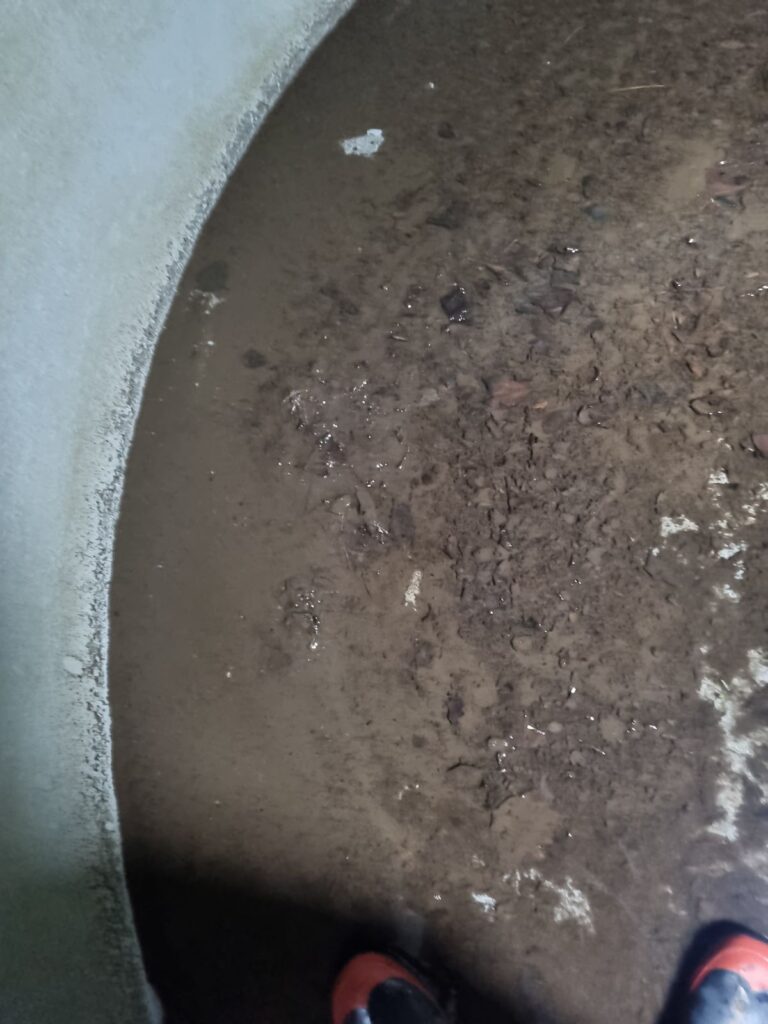
- Visible sediment in the bottom of a glass after the tank level drops, or grit in your shower head and tap aerators.
- Sludge reaching 250 mm deep when you check with a clean pole through the manhole, BRANZ’s explicit trigger point.
- A dead bird, possum or rodent found in the tank or gutters. This requires a full drain-and-scrub, not a desludge. Do not simply remove the animal.
- Gastro illness in the household with no other explanation. The 2001 Auckland study found households reporting gastrointestinal symptoms were over three times more likely to have Aeromonas in their water supply.
- You have never cleaned it and do not know when it last was. A Massey University survey of 560 NZ dwellings found 30% had never cleaned their tank and a further 18% did not know. If that is you, start with an inspection.
You should also clean before a large tanker delivery, more on why that matters in a moment.
If two or more of these apply to your tank, it is past due. Get a no-obligation quote for water tank cleaning in Auckland.
How much does water tank cleaning cost in NZ? (2026 prices)
Published prices from New Zealand tank cleaning operators as at 2026:
| Service type | Typical price (excl. GST) | Time on site | Water retained |
|---|---|---|---|
| Standard vacuum desludge | $250 – $300 | 1 – 2 hours | Up to 90% |
| Premium vacuum + filter service | around $435 | 1 – 2 hours | Up to 90% |
| Full drain, water-blast and scrub | $365 – $535+ | 2 – 4 hours | None – tank is emptied |
| Tanks over 30,000 litres | Quoted individually | Varies | Varies |
Budget $250–$550 plus GST for a standard domestic tank, with travel charged on top in rural areas. Prices climb for multiple tanks, difficult access, concrete tanks in poor condition, or a tank that has not been touched in a decade.
The real cost variable most people miss is the water itself. A full drain-and-scrub means refilling – and if it is not raining, that means a tanker. At current Auckland-region rates of roughly $300 for 10,000–12,000 litres (roughly 2.5–3 cents a litre), refilling a 25,000-litre tank from empty is a $600–$750 exercise on top of the cleaning fee.
This is exactly why vacuum desludging is the sensible default in Auckland: it removes the sludge while keeping up to 90% of your water in the tank.
Need the tank emptied and refilled as one job? Essential Bulk Liquids does both – see water tank cleaning in Auckland and tank water refill services.
The two cleaning methods, compared
1. Vacuum desludging (no drain)
Sludge is vacuumed off the tank floor through the manhole without entering or emptying the tank. Health NZ and ESR both endorse this approach, describing vacuum devices that desludge via the overflow, hose-based techniques, or pool-vacuum-style equipment.
Best for: annual maintenance, dry summers when water is precious, tanks in reasonable condition, anyone who does not want to buy a tankful of replacement water.
2. Full drain, water-blast and scrub
The tank is emptied completely, the walls and floor are water-blasted and brush-washed, sludge is removed and discharged, and the tank is refilled. Typically three to four hours.
Best for: a dead animal in the tank, visible algal growth or biofilm on the walls, a tank that has never been cleaned, a tank being brought back into service, or any confirmed contamination event. NZ operators typically recommend a deep clean every five years or so even on well-maintained tanks – consistent with MBIE’s guidance.
A note on tank entry. An enclosed water tank is a confined space. Entry carries genuine risks, oxygen depletion, falls, and structural collapse in older concrete tanks. Health New Zealand’s guidance is that professional tank cleaning contractors should ideally do this work. If you are doing it yourself, never enter a tank alone and never enter one without ventilation and someone stationed outside.
What a professional clean should include
When you book a tank clean, a competent operator should do all of the following. Use this as a checklist when comparing quotes:
- Inspect the tank and lid for cracks, light ingress, insect entry points and structural issues. Light in a tank means algae.
- Check and clear the inlet and outlet screens – ESR recommends this every three months regardless.
- Remove sludge and sediment from the entire floor, not just under the manhole.
- Clean or replace the first flush diverter, which becomes a contamination source once it fills with stagnant water.
- Discharge waste responsibly, away from waterways and effluent dispersal fields.
- Advise on the roof and gutters – no tank clean survives a gutter full of leaves and possum droppings.
- Recommend testing if the tank was heavily contaminated.
If a quote does not mention the screens, the diverter, or where the sludge is going, ask.
Every one of these steps is included as standard when we clean a tank anywhere in Rodney, Auckland or Franklin.
Testing your water after a clean
Cleaning removes what has accumulated. Testing tells you whether the water is actually safe to drink.
Use an IANZ-accredited laboratory. This is the standard Taumata Arowai applies to registered supplies under General Rule G8 – samples must be analysed by a laboratory accredited by IANZ for the type of analysis undertaken. Hill Laboratories and Watercare Laboratory Services are both IANZ-accredited. A DIY sampling kit analysed by an accredited lab is not the same as a supermarket test strip.
What it costs
- E. coli only: from around $64 for a sampling kit and lab analysis
- Full household panel (microbiology including E. coli, basic chemistry, and metals/minerals): around $250 excl. GST, results in about 7 business days
Given lead exceeded the MAV in 14.4% of Auckland tank supplies tested, the full panel including metals is worth the extra outlay at least once – particularly on an older roof.
How often to test
ESR’s guidance is direct: “For peace of mind home-owners should consider undertaking microbial testing every three months and chemical testing every year.” Test additionally after heavy rainfall following a long dry spell, whenever the system is altered, and when there is a pregnant person, an infant or an immunocompromised person in the household.
If a test comes back positive
Health New Zealand’s advice is unambiguous: “Boiling the water for one minute. Boiling is the simplest and most effective method to reliably kill Cryptosporidium parasites and other germs.” Boil while you arrange a clean and address the source – filters and UV units do not fix a contaminated tank, and a UV unit will not work properly on turbid water in the first place.
Preventing contamination between cleans
The Massey survey of 560 NZ dwellings found that 52% had no physical protection measures at all on their rainwater system. Only 6% had a first flush diverter. These are the cheapest wins available to a tank owner.
Gutters and screens
Clear gutters and leaf guards every three to six months (BRANZ), and clear the strainer after every significant storm (ESR). Cut back overhanging branches – they deliver leaves, and they deliver the birds and possums that produce droppings.
First flush diverters
A first flush diverter discards the initial, dirtiest run-off before it reaches the tank. It is the single highest-value addition to most NZ systems.
Sizing guidance genuinely conflicts, so here are both figures:
- BRANZ / Level: 20 litres per 100 m² of roof for minimal pollution; 50 litres per 100 m² for heavy pollution.
- Stan Abbott, Roof Water Harvesting Centre, Massey University: divert the equivalent of 2 mm of rain across the roof area, and at least 25 litres – which on a 100 m² roof works out roughly ten times BRANZ’s minimal-pollution figure.
Err toward the larger volume if your roof is under trees, near a road, or you have just come out of a dry spell. As Abbott notes, “the longer the dry period in between rainfall events, the greater will be the amount of pollutants deposited on the roof surfaces” – which makes the first rain after an Auckland summer the dirtiest water your tank will see all year.
Clean the diverter every two months (MBIE). An un-emptied diverter full of stagnant water is a contamination source, not a barrier.
Roof and materials
Auckland Council states plainly: “Your roof, flashings and gutters must not contain lead or lead paint. This can dissolve and contaminate your water supply.” Any new roofing or plumbing product in contact with drinking water should comply with AS/NZS 4020:2018. Keep the tank opaque and all openings sealed and screened, light causes algae, gaps admit insects and vermin.
Topping up with tanker water: what to check
If you are buying water, after a clean, during a dry summer, or to fill a pool, the carrier matters. Unlike your household tank, water carriers are regulated.
Under Taumata Arowai’s Drinking Water Quality Assurance Rules, a registered water carrier must:
- Rule WC1, source all transported water from a registered drinking water supply that is safe to drink and complies with the Drinking Water Standards.
- Rule WC2, take water only from a point in the distribution system prescribed by the supplier. In Auckland that means Watercare’s approved tanker filling stations, of which there are 12 across Rodney, Waitākere, the North Shore, Franklin and Manukau.
- Rule WC4 & WC5, use tanks dedicated exclusively to drinking water, kept clean and clear of contaminants with all openings and connections sealed.
- Rule WC6, disinfect any tanker unused for 30 days or more, by filling with drinking water containing at least 5 mg/L free available chlorine for no less than 30 minutes.
- Rule WC7, use backflow prevention or air gaps.
- Rule WC8, provide a delivery statement recording the fill date and time, the source, the delivery details and the carrier’s registration.
Three questions worth asking any water carrier:
- What is your Taumata Arowai registration, and which registered supply do you fill from?
- Are your tankers dedicated to drinking water only, or shared with other liquids?
- Will I get a delivery statement?
A carrier who cannot answer these is not one you want filling a tank you drink from.
Essential Bulk Liquids operates dedicated potable water tankers and supplies from registered sources across Rodney, Auckland and Franklin. [[ACTION: add “Our Taumata Arowai water carrier registration is XXXXX.” here]]
Why you should desludge before a big delivery, not after
This is the detail almost nobody mentions. Filling a tank stirs it up. As Stan Abbott of Massey University’s Roof Water Harvesting Centre puts it, transfer from the supplying vehicle “must be done in a manner that does not cause undue agitation of any sediment on the bottom of the tank”, and he concedes “it may be difficult to prevent stirring up settled sludge when filling rainwater tanks.”
A 10,000-litre delivery into a tank with 200 mm of sludge on the floor will resuspend that sludge through your entire supply. If your tank is low and due a clean, clean it while it is low, then fill it. You will pay for one job instead of two, and the water you buy stays clean.
Auckland tank owners: the local specifics
How much water you actually need
Auckland Council’s own figure is that an average four-person household uses more than 43,000 litres in a 60-day period – so a single 25,000-litre tank will need several top-ups across a dry summer. That works out to roughly 180 litres per person per day, meaning a family of four gets through about half a standard tank every two to three weeks.
Consents
Per Auckland Council: a building consent is required where rainwater is for indoor use or connected to internal plumbing, and installation must be carried out by a qualified, registered plumber. No building consent is needed for an outdoor-only tank sitting on the ground. Resource consent is generally not required in residential zones provided the tank is at least 10 m from a stream, 30 m from a lake and 10 m from the coastline, is not between the building frontage and the street, and is no more than 3 m high in a side or rear yard. It is always required in a Historic Heritage Overlay. On the Hauraki Gulf Islands, tanks are capped at 3 m and not permitted in front yards unless wholly below ground.
Drought and summer demand
Watercare’s position as at 2026 is that Auckland’s supply is stable with no restrictions in place. That can change: in the 2020 drought, 44 million litres were supplied from Watercare filling stations to rural Auckland, with emergency stations at 11 sites including Waiheke and Aotea/Great Barrier. If restrictions are activated, volume limits apply to residential tanker deliveries and rules kick in around filling pools. Book cleaning and top-ups early in the season rather than in February alongside everyone else.
Frequently asked questions
How often should a water tank be cleaned in NZ?
Official New Zealand guidance is to inspect the tank annually and desludge it every year, with a full drain-and-scrub every five years. Health New Zealand states tanks “should be inspected annually and cleaned if necessary”, while ESR guidance says cleaning “should be done at least annually”. Clean immediately – regardless of schedule – if the water becomes discoloured, cloudy, or develops a taste or smell.
How much does water tank cleaning cost in New Zealand?
A standard vacuum desludge costs roughly $250–$300 plus GST and takes one to two hours. A premium vacuum and filter service runs around $435 plus GST. A full drain, water-blast and scrub ranges from about $365 to $535 or more and takes two to four hours. Rural travel is usually charged on top, and tanks over 30,000 litres are quoted individually. If a full drain means refilling by tanker, budget another $300 or so per 10,000–12,000 litres.
Can I clean my water tank myself?
You can desludge a tank yourself using the sediment tap or a pool-vacuum-style device without entering it – MBIE describes this as roughly a 20-minute annual job. Entering a tank is a different matter: an enclosed tank is a confined space with real risks of oxygen depletion, falls and structural collapse. Health New Zealand’s guidance is that professional contractors should ideally carry out tank cleaning.
Is rainwater tank water safe to drink in New Zealand?
Not automatically. A study of 125 Auckland rainwater supplies found 56% exceeded the microbiological criterion for faecal coliforms and 14.4% exceeded the maximum acceptable value for lead. A 2026 University of Auckland study found two-thirds of sampled self-supply households had E. coli above safe levels, rising to 78% in North Auckland. Household tanks are not covered by the drinking water regulations, so testing is the owner’s responsibility.
How do I know if my tank needs cleaning?
Check the sludge depth through the manhole with a clean pole – BRANZ recommends desludging once sediment reaches 250 mm or is being drawn into the outlet. Other triggers are discoloured or cloudy water, a musty or metallic taste or smell, grit in tap aerators and shower heads, a dead animal in the tank or gutters, or unexplained gastro illness in the household.
Does cleaning my tank waste all my water?
Not if you choose vacuum desludging. That method removes sludge from the tank floor through the manhole without draining the tank, retaining up to 90% of your water. Only a full drain-and-scrub empties the tank, which is why it is usually reserved for contamination events or tanks that have never been cleaned.
Should I clean my tank before or after a tanker delivery?
Before. Filling a tank agitates whatever is sitting on the floor and resuspends it through the whole supply. Cleaning while the tank is low means less water to work around, one site visit instead of two, and the water you buy stays clean.
How do I know a water carrier is legitimate?
Ask for their Taumata Arowai registration and which registered drinking water supply they fill from. Registered carriers must source water from a registered supply that complies with the Drinking Water Standards (Rule WC1), fill only from prescribed points such as Watercare’s approved stations (Rule WC2), use tanks dedicated to drinking water (Rule WC4), and provide a delivery statement (Rule WC8).
How often should I test my tank water?
ESR guidance recommends microbial testing every three months and chemical testing annually. Test additionally after heavy rain following a dry spell, after any change to the system, and when there is a pregnant person, infant or immunocompromised person in the household. Use an IANZ-accredited laboratory – an E. coli test starts around $64, and a full panel including metals runs about $250 excl. GST.
Do I need a consent for a rainwater tank in Auckland?
A building consent is required if the rainwater is for indoor use or connected to internal plumbing, and a qualified registered plumber must do the installation. An outdoor-only tank sitting on the ground does not need one. Resource consent is generally not required in residential zones if setback and height rules are met, but is always required within a Historic Heritage Overlay.
Book a tank clean or a top-up in Auckland
Essential Bulk Liquids has been supplying and servicing water tanks across Rodney, Auckland and Franklin for over 20 years. We handle both halves of the job – professional water tank cleaning and the tank water refill to bring your supply back up afterwards, in one visit.
We also offer bulk water delivery, swimming pool refills, water tank hire, water truck hire and dust suppression for commercial sites. WINZ quotes are available on request.
Sources
- Health New Zealand — Te Whatu Ora, Water collection tanks and safe household water (HE10148, 2022)
- Health Promotion Agency / ESR, Household Water Supplies (HE4602, 2021)
- Water Services Authority — Taumata Arowai, Rules for water carriers
- Water Services Authority — Taumata Arowai, Drinking Water Regulation Report 2024 (June 2025)
- MBIE Building Performance, Collecting and using rainwater
- BRANZ Level, Rainwater systems — maintenance and repairs
- Auckland Council, Consent requirements for a rainwater tank
- Watercare, Bulk water supply and tanker filling stations
- Simmons G, Hope V, Lewis G, Whitmore J, Gao W. Contamination of potable roof-collected rainwater in Auckland, New Zealand. Water Research 2001;35(6):1518–24.
- Abbott S, Caughley B, Douwes J. The microbiological quality of roof-collected rainwater of private dwellings in New Zealand. Massey University.
- Massey University / EHINZ, Waterborne disease surveillance in New Zealand (January 2025)
- Massey University, Zinc link might make roof water safer to drink (Dr Carol Stewart, 2017)